
4 min read
5 Signs It's Time to Replace Your Pool Safety Cover
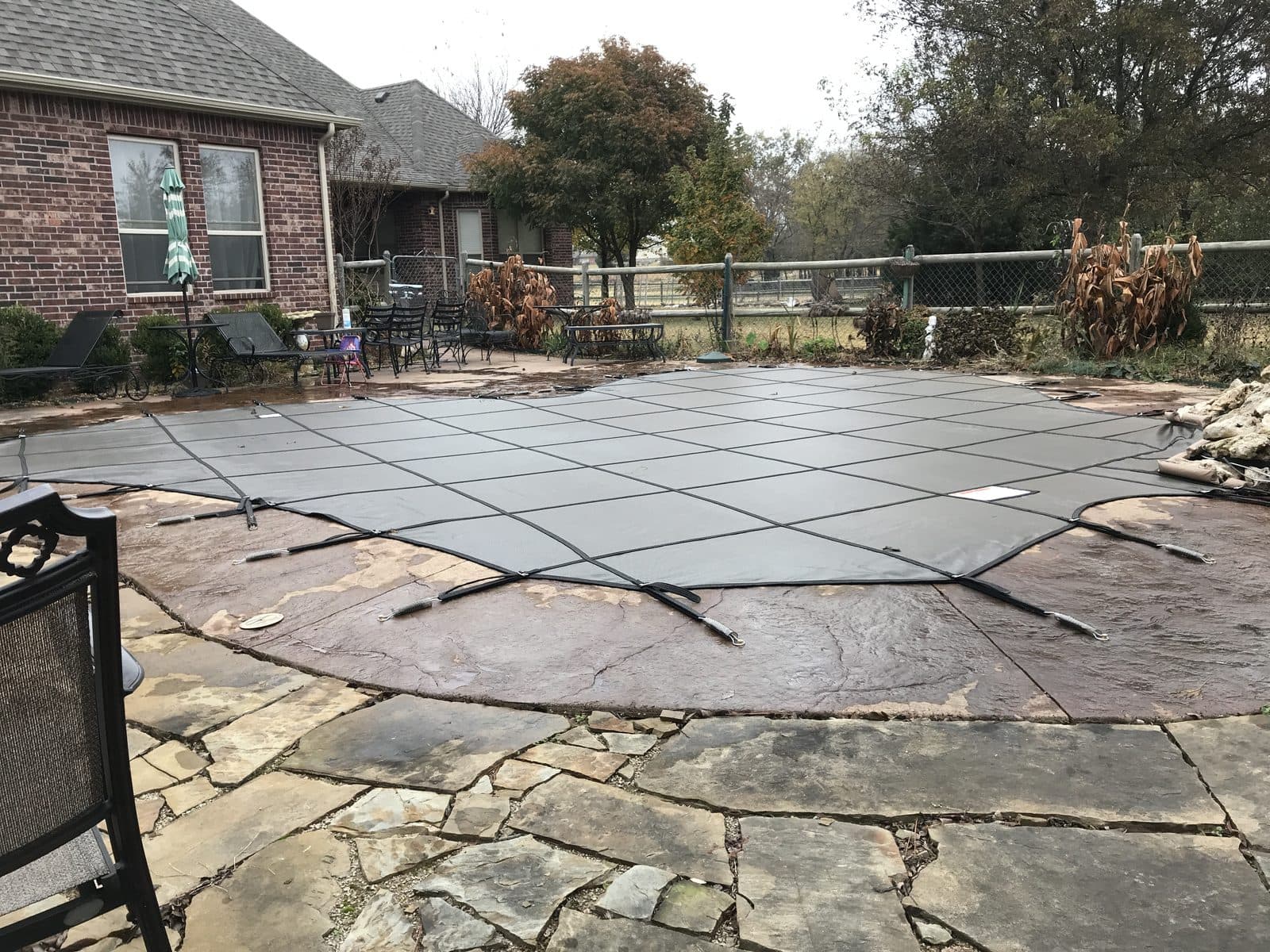
A safety cover has one job: hold weight. A child, a pet, a load of snow — a good cover stops it from going through to the water. When the fabric, the straps, or the anchors wear out, the cover still looks like a cover, but it stops being a barrier. That's the part most people miss. You don't replace a worn cover because it looks tired. You replace it because it can no longer do the one thing it's there for.
After building pools across the OKC metro since 2012, here are the five signs I tell people to watch for.
1. It sags and won't pull drum-tight anymore
A safety cover is supposed to sit tight and flat, like a trampoline. That tension is what spreads weight across the whole cover instead of letting it pool in one low spot. When you tension it and the middle still sags — or rainwater and snow collect in a low belly that won't go away — the cover has lost its structure. A sagging cover lets weight push straight down toward the water instead of holding it up.
2. Tears, holes, or worn spots in the fabric
Any tear, hole, or thin worn patch is a weak point. Mesh and solid covers both depend on the fabric being intact edge to edge — a hole big enough for a small animal or a child's foot defeats the whole purpose. Once the fabric starts going, small tears spread fast under tension and weather. A patch here and there is a sign the material is at the end of its life, not the start of a repair plan.
3. Faded, brittle, or fraying webbing and straps
The straps and webbing are what actually carry the load down to the anchors. Years of Oklahoma sun bake them. When the webbing looks bleached, feels stiff and brittle, or the edges are fraying, that strength is gone — even if the main fabric still looks okay. Brittle straps snap under a sudden load, exactly when you need them most. Faded, fraying webbing is one of the clearest tells that a cover is past its service life.
4. Anchors that pull out of the deck or won't hold
The brass anchors set into your deck are what the whole cover pulls against. If an anchor lifts, spins, wobbles, or pulls out when you tension the cover, that corner has no hold — and one loose corner takes the tension out of the whole cover. Anchors can sometimes be reset, but if several are failing or the deck around them is crumbling, the cover isn't anchored the way a safety barrier needs to be.
5. Straps or springs that won't tension anymore
Every strap runs to a spring that you stretch and hook into the anchor — that stretch is what holds the cover drum-tight all winter. When springs are rusted, stretched out, or so weak you can't get real tension anymore, the cover goes slack no matter how you set it. A cover you can't tighten is a cover that can't hold weight. If the straps and springs are shot across the board, it's time.
Time for a replacement? We measure for it
If you're seeing one or two of these, the cover may have a season or two left — but if it's sagging, torn, and the straps won't tension, stop trusting it as a safety barrier. When it's time, we custom-measure your pool for a replacement and quote it per pool. We can often reuse your existing deck anchors, which keeps the cost down. We install custom-measured Latham covers in mesh and solid — see our inground pool safety covers, and if you're still deciding on the material, read mesh vs. solid safety covers. To get measured, call Oklahoma Pool Cover Company at (405) 384-9660.