
4 min read
How a Pool Safety Cover Pays for Itself Every Spring
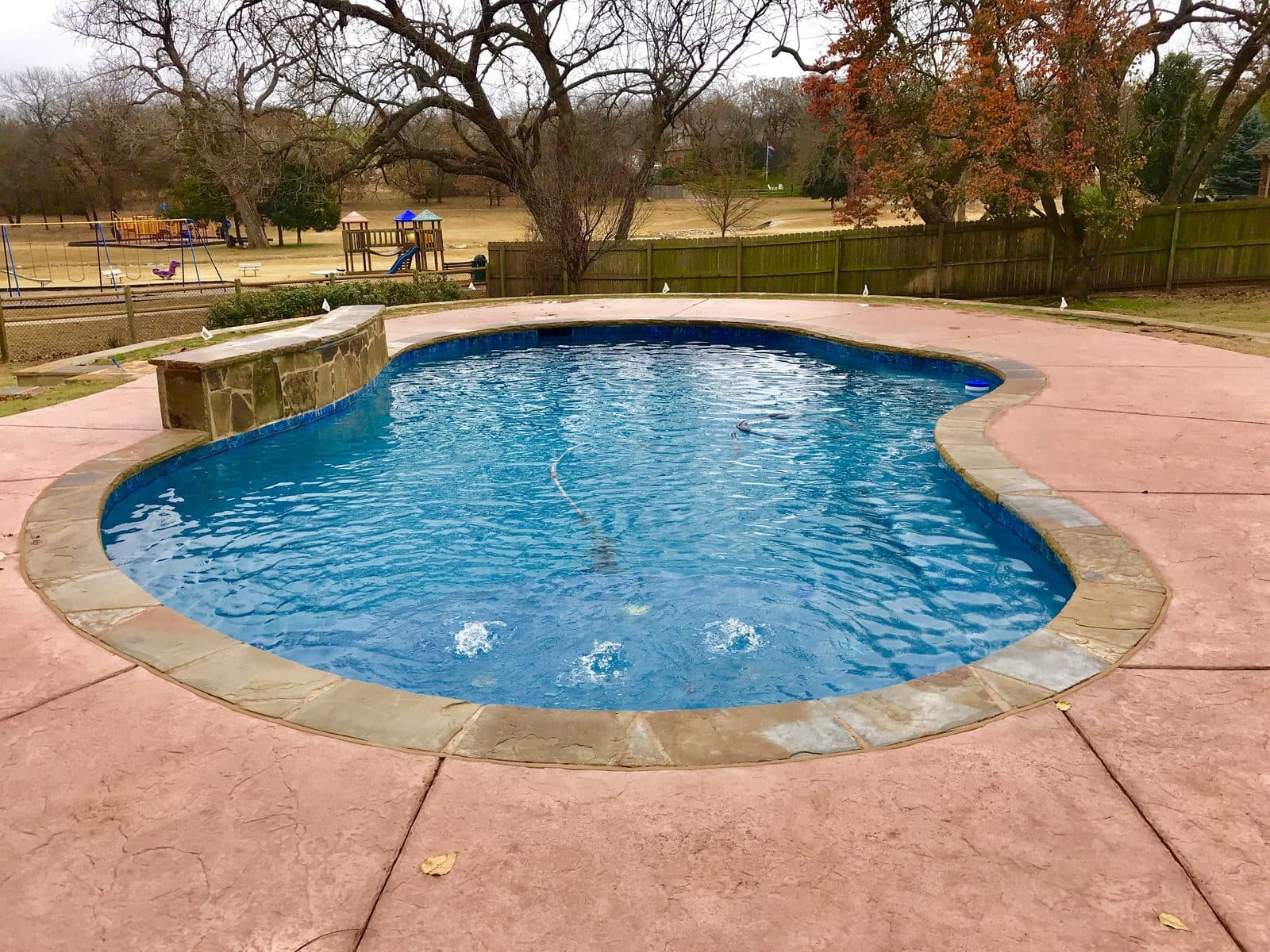
People look at a safety cover as a cost. We'd argue it's closer to the opposite. A good cover does its real work in March and April — the spring you don't spend a week and a small fortune in chemicals digging your pool out of a green hole. The cover that keeps your pool sealed and clean all winter pays you back every single opening.
Two pools in April
Picture two pools in Central Oklahoma the first warm week of spring. One spent the winter under a custom-measured safety cover. The other spent it under a cheap tarp that sagged into the water, or under nothing at all.
The covered pool:
- Water is still clear or close to it — sunlight and debris stayed out.
- Little to no leaf load on the bottom because nothing blew in.
- Chemistry held through winter, so it balances back fast.
- Opening is a few hours of work, not a project.
The uncovered or tarp-covered pool:
- Green, cloudy, sometimes black — algae had all winter to take over.
- Inches of rotting leaves and silt to vacuum out by hand.
- Heavy doses of shock and algaecide to kill the bloom, often more than once.
- Frequently a partial drain and refill — hundreds of gallons of water and the bill that comes with it.
The swamp recovery math
A green-pool recovery isn't one bad afternoon. It's repeat shock treatments, gallons of algaecide, running the filter around the clock, backwashing, and hours of vacuuming muck to waste. If the water's far enough gone, you drain part of it and pay to refill — and on a fresh fill you're buying a full round of startup chemicals on top of that.
Now add the part nobody puts a dollar figure on: your time, or what a service company charges to do it for you. A swamp recovery routinely runs several times the cost of a clean opening once you total the chemicals, water, and labor. The cover doesn't just save money — it saves the headache of fighting your own pool every spring.
Less burned all winter, and a finish that lasts
A sealed pool burns far less chemistry over the winter because sunlight isn't cooking off your chlorine and organic debris isn't constantly feeding the water. Less goes in over the cold months, and less is needed to bring it back in spring.
Keeping junk off the surface protects the finish, too. Leaves, dirt, and standing organic gunk left to sit all winter can stain plaster and stress a vinyl liner. A cover keeps that load off the shell entirely, so the surface you paid for stays looking like the surface you paid for.
Why the cost spreads out
A quality safety cover isn't a one-season purchase. A well-built Latham cover, custom-measured and properly anchored, holds up for many years across Oklahoma winters. Spread the price over every season it serves and every clean opening it buys you, and the per-year number drops fast. That's what makes it an investment rather than a cost — it keeps paying while it's on the pool, not just the day you buy it.
It does real safety work the whole time, too: a proper safety cover is a barrier rated to hold the weight of a child or pet, not just a sheet that keeps leaves out. You're getting the protection and the savings from the same piece of gear.
Get a Cover Quote
Every pool is different, so we custom-measure and quote each cover to your pool — we don't sell one-size-fits-all. Owner Kenny Lewis has been building pools since 2012, so he knows exactly how a cover should fit and anchor to actually do its job. Take a look at our inground pool safety covers— professional winterization is included with every install. Call (405) 384-9660and we'll get you measured and quoted.